Brain Test All-Star: IQ Boost
- 4.8
- Rating
- 10.00M
- Installs
- Free
- Price

 Analysis by App-foxy
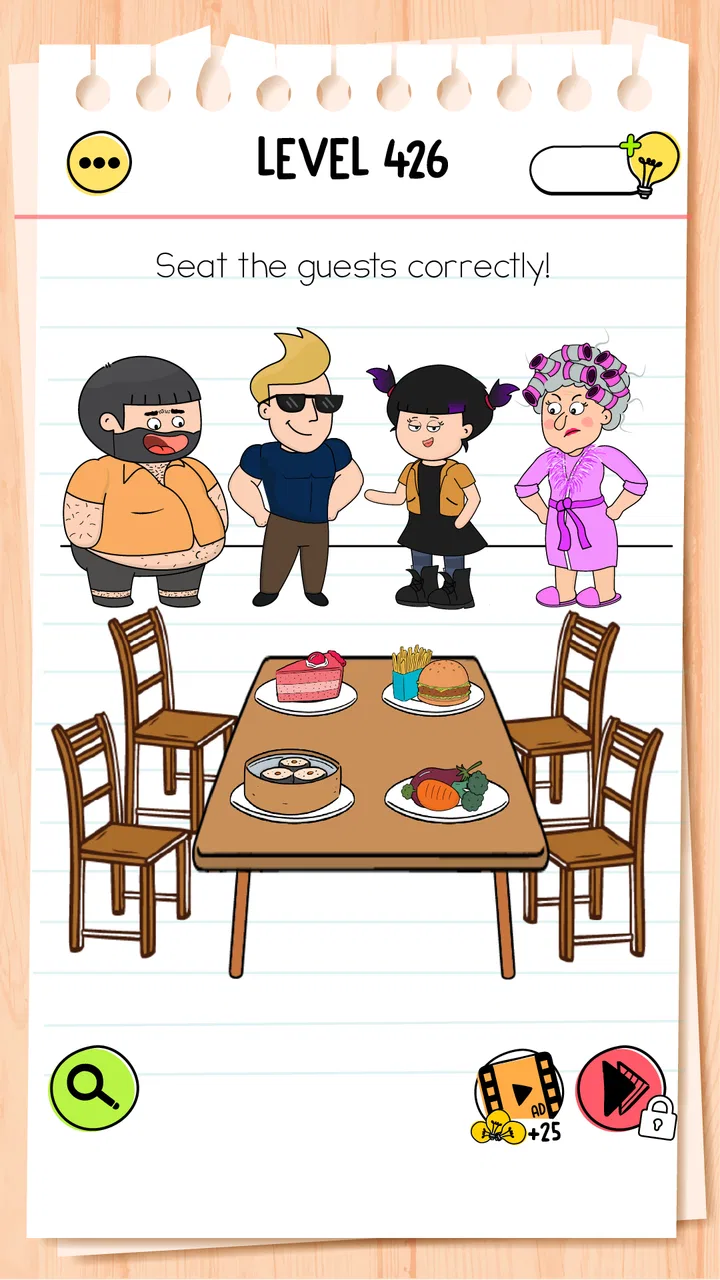
I enjoy trivia games most when they make me stop, rethink an obvious answer, and laugh at my own assumptions. Brain Test All-Star: IQ Boost takes that approach and turns it into a large collection of short, tricky challenges. It is a free puzzle game from Unico Studio, aimed at players aged Everyone 10+, and it works best as a quick mental break rather than a serious study tool. After spending time with it, I found the main appeal is not simply knowing facts. The game asks me to question the wording, inspect the screen carefully, and avoid solving every problem in the most predictable way.
The game has already built a substantial audience, with an average rating of 4.7 from around 670 thousand ratings and more than 10 million installs. Those figures fit my impression of its identity: this is a familiar, accessible mobile trivia experience designed to be picked up quickly. It is free to start, although optional purchases range from $0.99 to $14.99 per item. The current version is 1.4.7, and the game was released on August 3, 2024.
How Brain Test All-Star: IQ Boost feels during everyday play
I find the everyday appeal is in how easily a puzzle can fit between other things, without asking me to settle in for a full game. The useful trick is to pause before tapping and decide whether the challenge is testing what I know or how I’m interpreting the prompt; that choice can save needless frustration. From there, the way each attempt responds is what shapes the rhythm of play.
You May Also Like

 Pandora - Music & Podcasts
Pandora’s Music Is Easy to Start, but Harder to Recover
Pandora’s strength is its low-effort path from a seed to a station. Its weak spot is how much confidence it asks you to place in connection, setup, and quiet recovery.

 AccuWeather: Weather Radar
AccuWeather Review: A Quick, Clear Forecast for Everyday Decisions
For everyday plans, the best forecast is the one you can understand quickly. AccuWeather makes rain timing, radar, and local conditions easy to act on, with a few trade-offs.

 Hill Climb Racing
Why Hill Climb Racing Still Turns Crashes Into One More Run
A tiny car, a bumpy hill and one more upgrade: Hill Climb Racing keeps resurfacing because its simple chaos makes every near-miss feel personal.

 AliExpress - Shopping App
AliExpress Makes Global Shopping Feel Personal, but Shoppers Bear the Risk
AliExpress turns a global marketplace into a pocket-sized discovery engine. Its reach is useful, its shopping loop compelling, and its trade-offs easy to miss.

 Lords Mobile: Kingdom Wars
Lords Mobile Is a Kingdom-Building Routine, Not a Quick Match
A case-by-case verdict on the building, battles, device demands, and social commitments that make Lords Mobile rewarding for some players and exhausting for others.

 PDF Scanner app - TapScanner
TapScanner Makes Paperwork Easier to Capture, Check, and Share
TapScanner makes scanning with a phone feel less like a rescue operation and more like a dependable step in getting work done. Its capture tools are useful, though not flawless.
More From Our News Desk
View All News


Quick starts and short puzzle sessions
The strongest performance expectation here is convenience. A puzzle game built around brief challenges naturally suits those moments when I have only a few minutes: waiting for an appointment, taking a break from work, or sitting on public transport. I do not need to prepare a long session or remember a complicated control scheme. I can open it, attempt a challenge, and stop after making progress.
That short-session design also affects how I judge speed. The value is not in constant action or advanced graphics. It is in getting from one puzzle to the next without making the experience feel like work. When the game responds promptly, the simple interaction style stays out of the way and lets me concentrate on the trick in front of me. For this kind of title, that matters more than visual spectacle.
I would not choose it when I want a deep, uninterrupted brain-training routine. The puzzles are better suited to bursts of attention than to a formal plan with carefully measured improvement. Someone looking for lessons in mathematics, language, or general knowledge may prefer a dedicated learning app. This game is about playful problem-solving, not a structured course.
The real challenge is reading the question differently
What separates this series from an ordinary quiz is the way it encourages lateral thinking. A conventional trivia game usually rewards recall: I read a question, search my memory, and select the answer that seems correct. Here, I have to consider whether the wording is trying to lead me toward a wrong assumption. Sometimes the obvious response is exactly the trap.
That makes the game more approachable for people who do not consider themselves trivia experts. I can still solve a challenge through observation or experimentation even when I do not know a particular fact. It also means that a player who is very knowledgeable may still get caught by a misleading presentation. The game tests flexibility as much as memory.
My practical advice is to slow down before tapping. Read every word, examine the whole screen, and try the simplest unusual action before spending help resources. A common mistake is to treat each puzzle like a multiple-choice test. The better habit is to ask, “What assumption is this question trying to make me accept?” That small change in approach makes later puzzles feel less random.
What happens when a session becomes heavy
Longer sessions reveal a trade-off. The individual challenges are easy to approach, but the mental effort can become repetitive if I play for too long without a break. The game’s format encourages one-more-puzzle behavior, yet the pleasure comes from surprise. Once I have been playing continuously, I may start tapping through familiar patterns instead of thinking carefully.
For that reason, I get more from it when I use a short rotation: solve several puzzles, pause, and return later. This is not just about avoiding boredom. Taking a break can genuinely help with a puzzle that feels impossible because I stop forcing the first interpretation that came to mind. When I return, I often notice a detail that was visible all along.
Heavy use can also make the free-to-play structure more noticeable. If I want to keep moving rapidly, I may be tempted by optional purchases between moments of frustration. I prefer treating hints or paid items as a last resort. The game is more satisfying when I first test alternate interpretations, and keeping that discipline prevents a quick puzzle session from turning into an unnecessary expense.
Stability and recovery after interruptions
A mobile puzzle game should be forgiving when real life interrupts it. I frequently switch away from games to answer a message, check a calendar, or take a call. Brain Test All-Star: IQ Boost is the sort of title I can fit around those interruptions because its challenges are compact and do not demand a long continuous round.
That does not mean every session will feel identical on every phone. Device age, available storage, background activity, and the operating system can influence how smoothly any mobile game behaves. The confirmed minimum requirement is Android 7.0, so owners of older devices should check compatibility before committing to it. On a supported phone, I would expect the basic puzzle format to be less demanding than a modern action game, but I would still keep the system reasonably clear if the device is already struggling.
Recovery is also easier when I do not treat a failed attempt as a major setback. These puzzles are designed around trying an idea, learning that it is wrong, and reconsidering the scene. If an interruption breaks my concentration, I can reread the prompt rather than feeling that I have lost a long match. That is one of the quiet advantages of this format over games built around a single extended round.
Device limits and practical expectations
The game is rated Everyone 10+, which makes it a reasonable option for older children, teenagers, and adults who enjoy playful riddles. I would still use personal judgment for younger players, especially because the difficulty can encourage repeated attempts and because optional purchases are available. A child using a shared device should have a clear understanding of when spending is allowed.
The age rating also helps set expectations about tone. This is not a dark thriller or a competitive online battlefield. Its appeal comes from puzzles that can be discussed with someone nearby. I can hand a challenge to a friend or family member and compare interpretations, which gives the game a social use even when I am playing on one phone.
On the technical side, I would not buy a new device specifically for this game. Its core attraction does not depend on high-end hardware. If a phone already runs modern apps comfortably and meets the Android requirement, it is a sensible candidate. If the device has very little free space, frequently closes apps, or uses an unsupported operating system, the issue is likely to be the phone’s general condition rather than the puzzle concept itself.
How it compares with ordinary trivia games
Compared with a standard trivia app, this game is less useful for measuring factual knowledge. A traditional quiz can tell me whether I remember a capital city, historical event, or scientific term. Brain Test All-Star: IQ Boost is more interested in how I approach a question. That makes it more unpredictable and often more amusing, but it also makes the outcome less meaningful as a score of what I know.
Compared with a pure brain-training app, it is more casual and less systematic. I would not use it to replace a focused memory routine or a learning program. Its advantage is immediate entertainment: I can start without deciding which skill I want to train. Its weakness is that players who want detailed progress tracking, formal exercises, or measurable practice may find the experience too loose.
Compared with a word game, it offers a wider range of puzzle thinking rather than concentrating on spelling or vocabulary. Compared with a visual puzzle game, it may ask me to reinterpret language as much as inspect images. That mixture is why it can appeal to households with different tastes, although players who dislike trick questions may find the same quality irritating.
Three habits that improve the experience
My first useful habit is to separate knowledge problems from assumption problems. If I genuinely do not know something, I consider a hint. If the prompt feels strangely simple, I assume the wording or visual layout is the real challenge and inspect it again before using help. This saves resources and keeps the central idea of the game intact.
Second, I avoid rapid tapping when a puzzle looks obvious. I check the corners of the screen, reread small details, and consider whether the expected answer is deliberately too convenient. This is especially helpful during a long session, when fatigue makes me rely on automatic responses.
Third, I use the game as a conversation starter. When a puzzle catches me out, I show it to someone else without explaining my failed approach. Their first reaction often reveals how strongly the wording guides the player. That makes the game more enjoyable in a family setting and turns a solitary puzzle into a brief shared challenge.
Who should download it, and who should skip it?
I recommend it to players who want a free, approachable trivia game with a mischievous puzzle style. It is a good fit for short breaks, casual family play, and anyone who enjoys discovering that the first answer is not always the right one. The large install base and strong average rating suggest that this format has broad appeal, but popularity does not remove the need to match the game to your habits.
I would skip it if I want a serious knowledge test, a quiet logic game with no tricks, or a structured educational program. I would also be cautious if I know I dislike hint systems and optional purchases, because frustration can make those elements more noticeable. Players who prefer long stories, competitive matches, or rich action will probably find the short puzzle format too lightweight.
My performance verdict
Brain Test All-Star: IQ Boost feels best when I judge it as a quick-thinking game rather than a technical showcase. Its short challenges make it easy to fit into daily life, and its lateral approach gives it more personality than a basic question-and-answer quiz. The most important performance advantage is practical: I can play in small pieces and recover from interruptions without losing the shape of a long match.
There are still limits. Extended sessions can become repetitive, the trick-question style will not suit everyone, and optional purchases require sensible boundaries. Device behavior can vary with age and system condition, so meeting the Android requirement should be treated as a starting point rather than a guarantee of identical results on every phone.
Overall, I think Unico Studio has made a welcoming choice for casual puzzle fans. The free entry point makes it easy to try, while the broad collection gives curious players plenty of reasons to return. If you enjoy questioning the obvious more than memorizing a list of facts, this is one of the better ways to turn a few spare minutes into a playful mental workout. I would download it for relaxed, stop-and-start entertainment, while choosing a conventional quiz or focused brain-training app when I need accuracy, structure, or measurable learning.
FAQs for Brain Test All-Star: IQ Boost
01What is Brain Test All-Star: IQ Boost and how does it work?
Brain Test All-Star: IQ Boost is a puzzle game designed to challenge and enhance your cognitive abilities. It offers a variety of brain teasers, logic puzzles, and tricky questions aimed at testing your problem-solving skills. The game features multiple levels, each with unique challenges that require creative thinking and quick wit to solve.
02Is Brain Test All-Star: IQ Boost suitable for all age groups?
Yes, Brain Test All-Star: IQ Boost is suitable for players of all ages. The puzzles range from easy to challenging, making it accessible and enjoyable for both younger players and adults. However, younger children may require some guidance to fully grasp the more complex puzzles and logic games included.
03Does Brain Test All-Star: IQ Boost require an internet connection to play?
No, Brain Test All-Star: IQ Boost does not require an internet connection for general gameplay. You can enjoy solving puzzles offline. However, an internet connection may be necessary for downloading updates, accessing leaderboards, or engaging in any online features that the developers might introduce.
04Are there in-app purchases in Brain Test All-Star: IQ Boost?
Yes, Brain Test All-Star: IQ Boost includes in-app purchases. Players can buy hints, skip challenging levels, or unlock additional content. While the game can be enjoyed without spending money, these purchases provide additional convenience and enhance the gaming experience for those who choose to use them.
05How can I get help if I’m stuck on a puzzle in Brain Test All-Star: IQ Boost?
If you find yourself stuck on a puzzle in Brain Test All-Star: IQ Boost, you can use hints to get assistance. The game offers a hint system that provides clues to help you solve difficult puzzles. Additionally, online forums and communities are available where players share tips and strategies.
Pros
- Engaging puzzles enhance cognitive skills.
- Variety of levels keeps interest alive.
- User-friendly interface for all ages.
- Regular updates with new challenges.
- No internet required for gameplay.
Cons
- Ads can be intrusive at times.
- Some levels feel repetitive.
- In-app purchases for hints.
- Occasional bugs in older devices.
- Limited customization options.

Brain Test All-Star: IQ Boost
Gallery